
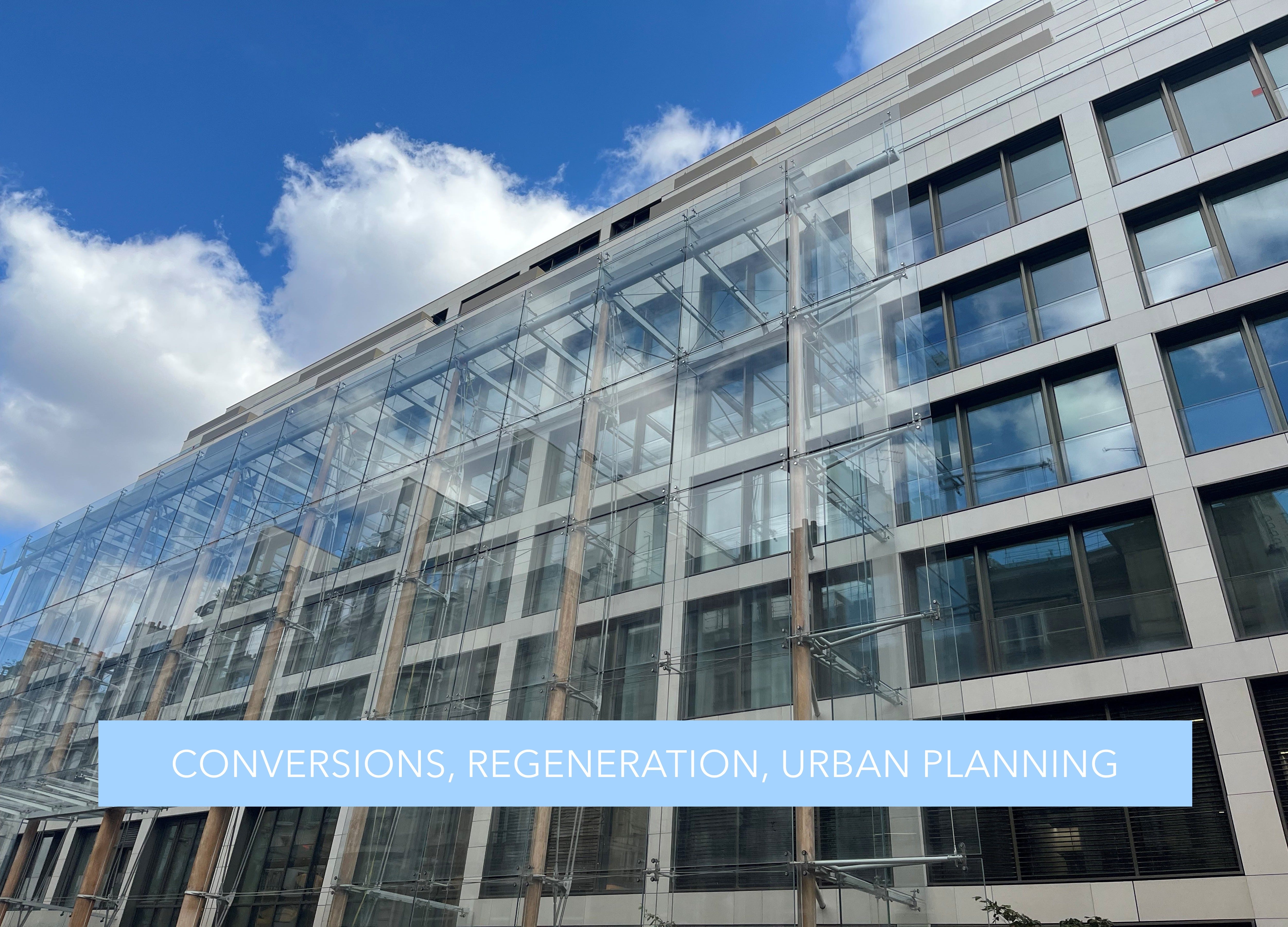
What’s Old Is New. The Business Case for Adaptive Reuse
Report by ULI (2025) | Conversions, Regeneration, Urban Planning
Curators: Ana-Mihaela Faciu and Alexandra Faciu
Westmount, Canada
This post is accessible to all readers.
Why we recommend it: Adaptive reuse is emerging as a critical strategy for converting aging buildings into high-performing assets that deliver measurable financial, environmental, and social value. The report provides an in-depth analysis showing how it can drive profitability, revitalize neighborhoods, reduce carbon emissions and preserve cultural identity within a triple bottom line framework that promotes sustainable urban growth and investment. Urbanization is accelerating, and 80% of the global population is expected to live in cities by 2050, most within existing building stock. This means that the need to transform aging infrastructure is becoming urgent. In the U.S. alone, 5.9 million commercial buildings encompassing 96 billion square feet present both a challenge and an opportunity for retrofitting to meet shifting market needs, climate goals, and urban growth objectives. According to this paper, buildings currently account for between 60 and 80% of urban greenhouse gas emissions, which is placing considerable pressure on cities and real estate firms to achieve carbon neutrality by 2050 or sooner. The UN Intergovernmental Panel on Climate Change has called for a tenfold increase in renovation and retrofitting rates, from 1% to as much as 10% annually, emphasizing the scale of action required to align the built environment with global sustainability targets.
Key takeaways:
- By reimagining existing structures, developers can significantly reduce embodied and operational carbon emissions, enhancing both sustainability and resilience. This approach not only preserves the cultural and architectural identity of urban areas but also aligns real estate supply with contemporary market needs. The study finds that adaptive reuse generates a self-reinforcing cycle of value, stimulating local economies, improving environmental performance, and strengthening social cohesion, all of which contribute to rising property values and renewed investment interest.
- The report introduces a framework grounded in the triple bottom line of people, planet, and profit, encouraging stakeholders to assess financial viability alongside broader social and environmental impact. Through this holistic perspective, adaptive reuse stands out as a strategy that simultaneously benefits developers, strengthens cities, and fosters thriving communities.
- The report presents three relevant case studies to build its thesis:
o West Bottoms Flats, Kansas City, Missouri shows how adaptive reuse can spark economic growth. The project converted four vacant buildings in the West Bottoms North Historic District into apartments, microretail, and indoor/outdoor amenity space. Low acquisition costs, historic tax credits, and green incentives made the project viable. Unique microunits in restored warehouses attracted demand, driving sharp increases in rents and property values.
o Congress Square (40 Water Street), Boston, Massachusetts is a 370,000 square foot office building located in the center of the Financial District, close to both North and South Stations. The project revitalized a historic downtown block, attracting commercial tenants back from the Seaport District. The project combined preserved ground-floor architecture with a modern glass rooftop addition, creating a distinctive blend of old and new. Its success helped re-establish the area as a vibrant, transit-accessible business hub.
o Oriente Green Campus, Lisbon, Portugal repurposed an unfinished mall into a biophilic tech hub, addressing Lisbon’s tight office market. Designed for shared university and business use, the project features passive ventilation, natural light, and green integration. Full occupancy is expected to spur new retail and neighborhood services in its close vicinity.
- The report stresses that success is contingent on the local context, which includes market needs, building suitability, incentives, and community priorities. Adaptive reuse is a flexible approach to urban planning that can address a range of challenges, including vacancy and housing shortages.
- Finally, the involvement of experienced teams, including architects, engineers, and preservation specialists, from the outset is essential to effectively manage risk, optimize transformation potential, and maintain cost control throughout the adaptive reuse process.
To access the document click 🔗 this link
If you encounter any difficulties, please contact us at info@samcurated.com and we will provide you with assistance. Please allow 24 to 48 hours for turnaround times, slightly longer during the weekends.
Disclaimer: SAM Curated, the curators and any other guests invited to share their opinions assume no responsibility or liability for any errors or omissions in the content of this site and/or email generated by this site. Please note that the information on this site is provided on an “as is” basis, with no guarantees of completeness, accuracy, usefulness or timeliness.


